Bruges in Bloom: When Cobblestones Echo with Celebration
Have you ever walked through a city that feels like a living storybook? Bruges isn’t just canals and chocolate shops—it’s a place where every season brings a new reason to celebrate. From medieval festivals to flower parades, the city pulses with tradition. I’ve wandered its alleys during silent nights and vibrant feasts, and trust me, its true magic lies in how locals keep centuries-old customs alive. This is more than tourism—it’s cultural immersion at its finest. The rhythm of Bruges is not measured in clocks but in the turning of seasons, each marked by gatherings that honor history, faith, art, and community. To visit Bruges during a festival is to step into a story still being written, one where every cobblestone seems to whisper memories of the past and rejoice in the present.
The Heartbeat of Bruges: Understanding Its Festival Soul
Bruges, a UNESCO World Heritage site nestled in the heart of West Flanders, is more than a postcard-perfect destination—it is a city that breathes through its festivals. These celebrations are not modern inventions for tourist appeal but deeply rooted expressions of a cultural identity shaped over centuries. The festival soul of Bruges emerges from a blend of religious devotion, civic pride, and seasonal awareness, passed down through generations. Unlike cities where traditions have faded under globalized influences, Bruges maintains a living connection to its past, where each event serves as both remembrance and renewal.
Historically, Bruges flourished as a major trading hub during the Middle Ages, and its wealth fostered a rich civic and religious life. This legacy is still visible in the grand architecture and enduring customs. The calendar here is not dominated by commercial holidays but by events tied to agricultural cycles, religious feasts, and historical milestones. Spring marks rebirth with floral displays and music, summer hosts open-air performances in ancient cloisters, autumn brings artistic reflection, and winter glows with candlelit markets. Each season offers a different facet of Bruges’ identity, inviting both residents and visitors to participate in a rhythm that feels both timeless and immediate.
What sets Bruges apart is the level of community involvement. These festivals are not staged performances for outside audiences but shared experiences in which locals take pride. Families prepare costumes, volunteers organize events, and neighborhood associations sponsor processions. This grassroots engagement ensures authenticity. Tourists are not merely spectators but welcomed guests in a living culture. The city’s intimate scale—compact, walkable, and human in proportion—fosters connection rather than spectacle. One does not watch a festival from a distance; one walks beside it, hears its chants, smells its incense, and feels its pulse.
The emotional resonance of these events lies in their continuity. Children grow up attending the same processions their grandparents once did, creating a sense of belonging that transcends generations. This continuity is not static—it evolves gently, incorporating modern elements without losing its essence. A digital guide may accompany a historical walk, or a contemporary art piece may be installed in a medieval square, but the core remains: a celebration of place, memory, and shared identity. In a world where many traditions are fading, Bruges offers a model of how cultural heritage can remain vibrant and relevant.
The Procession of the Holy Blood: Faith, Pageantry, and Legacy
No event captures the spirit of Bruges more profoundly than the annual Procession of the Holy Blood, held on Ascension Day. This centuries-old tradition draws thousands each year, not only for its visual grandeur but for its deep spiritual and historical significance. Dating back to the 13th century, the procession commemorates the belief that Joseph of Arimathea brought a vial of Christ’s blood to Bruges, a relic now housed in the Basilica of the Holy Blood in the city’s historic center. Whether one approaches it as an article of faith or a cultural artifact, the event stands as a powerful symbol of Bruges’ enduring devotion and communal memory.
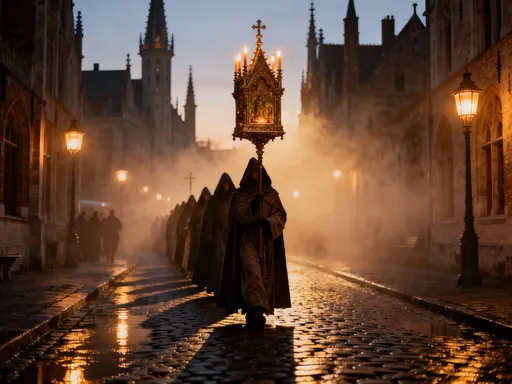
The procession unfolds over several hours, winding through the city’s narrow cobbled streets in a carefully choreographed sequence. Over a thousand participants take part, dressed in meticulously recreated medieval attire—knights in armor, monks in flowing robes, guild members in ceremonial garb. The atmosphere is one of reverence and pageantry, where history feels palpably present. The highlight is the slow, solemn passage of the Holy Blood relic, carried aloft in an ornate golden reliquary, accompanied by chanting clergy and the tolling of church bells. As it passes, onlookers often cross themselves or bow their heads, a gesture that transcends tourism and touches the sacred.
Sensory details define the experience. The air carries the scent of beeswax candles and frankincense, mingling with the cool spring breeze. The rhythmic footsteps of marching groups echo against stone facades, while traditional brass bands play hymns composed centuries ago. Children wave handmade flags, and elderly residents lean from balconies, some weeping quietly. These moments are not staged for effect—they arise from genuine emotion. The procession is not a reenactment but a living act of remembrance, where faith, history, and civic pride converge.
While deeply religious in origin, the event welcomes all. Visitors are not expected to share the beliefs but are encouraged to observe with respect. Informational brochures and guided audio tours provide context, helping non-believers appreciate the symbolism without intrusion. Pilgrims come from across Europe, some on foot, fulfilling vows or seeking solace. Others arrive out of curiosity, drawn by the spectacle. Yet, despite its scale, the procession maintains an intimate quality. The route is contained within the historic center, and the pace is meditative, allowing space for reflection. In an age of fast-paced entertainment, this slow, deliberate ritual offers a rare opportunity to pause and witness something greater than oneself.
Gentle Rhythms: Spring and Summer Festivals
If the Procession of the Holy Blood represents Bruges’ solemn heart, its spring and summer festivals reveal its joyful spirit. These seasons transform the city into a canvas of color, music, and gentle celebration. Among the most beloved is the Bruges Flower Festival, a biennial event that turns public squares, parks, and even historic staircases into breathtaking displays of floral artistry. Orchids, tulips, daffodils, and thousands of other blooms are arranged into intricate patterns, sculptures, and thematic installations, often inspired by Flemish art or local legends. The Minnewater Park, already famed for its swans and tranquil lake, becomes a dreamlike garden, where visitors stroll beneath arches of blossoms and pause beside fountains adorned with petals.
What makes this festival special is its accessibility and charm. Unlike large commercial flower shows, it is integrated into the city’s daily life. Blooms appear in unexpected places—a window box bursting with color, a canal bridge wrapped in ivy and roses, a courtyard where azaleas frame a 15th-century fountain. The emphasis is on beauty in harmony with heritage, not competition or spectacle. Families spend afternoons picnicking under blooming trees, children chase butterflies in meadow-like plantings, and photographers capture the fleeting perfection of each arrangement. The festival lasts several weeks, allowing visitors to experience it at a relaxed pace, returning to see how the flowers change with the weather and time.
Equally enchanting are the classical music events held in Bruges’ historic spaces. Throughout spring and summer, the city hosts concerts in Gothic churches, medieval cloisters, and aristocratic townhouses. These venues, with their stone walls and vaulted ceilings, create natural acoustics that enhance the music’s depth and resonance. Performances range from Renaissance polyphony to Baroque sonatas, often played on period instruments. One might hear a Vivaldi concerto in the Church of Our Lady, its notes echoing beneath the tallest brick tower in the world, or a lute recital in the courtyard of the Begijnhof, a UNESCO-listed site of serene beauty.
These concerts are not exclusive affairs. Tickets are modestly priced, and some performances are free to the public. Audience members—locals and travelers alike—sit on wooden benches, dressed casually, sharing a quiet appreciation for art and atmosphere. The experience is intimate, almost private, as if one has been invited into a centuries-old ritual of beauty and contemplation. For families, many events are child-friendly, offering shorter programs or interactive introductions. The message is clear: culture is not reserved for elites but belongs to everyone. In these moments, Bruges reveals itself not as a museum but as a living city where art continues to breathe in the spaces that inspired it.
Autumn Echoes: Art, Beer, and Intimate Gatherings
As summer fades, Bruges takes on a quieter, more reflective tone. Autumn is a season of subtle beauty—golden light on weathered stone, mist rising from canals at dawn, and a sense of introspection that invites deeper engagement. This is when the city reveals another dimension of its cultural life: contemporary art and craft traditions woven into the medieval fabric. The Bruges Triennial, a modern art exhibition held every three years, exemplifies this blend. Artists from around the world are invited to create site-specific installations that dialogue with the city’s architecture and history. A mirrored tower might rise beside a 13th-century gate, or a sound sculpture could echo in a forgotten alley, prompting visitors to see familiar places anew.
What makes the Triennial remarkable is its sensitivity to context. Rather than imposing modern art as a contrast, the curators emphasize harmony and conversation. Installations are often temporary, eco-conscious, and designed to enhance rather than disrupt. Visitors explore on foot, following a map that leads through hidden courtyards, abandoned warehouses, and rooftop gardens. The experience feels like a treasure hunt, rewarding curiosity and attention. Families enjoy it together, with children especially drawn to interactive pieces—light displays, kinetic sculptures, or audio walks. The event draws art lovers without alienating those who come for history, proving that Bruges can honor its past while embracing the present.
Autumn is also the season of beer. Belgium’s brewing tradition is world-renowned, and Bruges offers a rich tapestry of local and regional brews. While the city is famous for its chocolate, its beer culture is equally profound, rooted in monastic practices and small-scale craftsmanship. During harvest-themed events in September and October, local breweries host tastings, tours, and pairing dinners. Visitors can sample seasonal ales—amber-hued, spiced with herbs, or aged in oak barrels—each with a story tied to the land and the season. Some breweries are located in former monasteries, where Trappist monks still brew in silence, adhering to centuries-old methods.
These gatherings are intimate, often held in cozy taverns or courtyard breweries. Unlike large beer festivals elsewhere, Bruges maintains a focus on quality and tradition over volume and noise. Conversations flow slowly, glasses are raised with care, and the emphasis is on savoring rather than consuming. Locals share anecdotes about family recipes, favorite pairings, and the best places to drink by the canal at sunset. For visitors, it’s an invitation to slow down, to appreciate the craft, and to connect through a shared love of flavor and heritage. In these moments, Bruges feels less like a destination and more like a home.
Winter’s Embrace: Markets, Lights, and Quiet Magic
When winter arrives, Bruges transforms into a scene from a northern European fairy tale. Snow dusts the rooftops, frost traces delicate patterns on windowpanes, and the city glows with thousands of warm, golden lights. The Christmas market, centered in the Market Square and stretching toward the Burg, becomes a hub of warmth and fragrance. Wooden chalets sell hand-carved ornaments, woolen scarves, and traditional treats like waffles, speculoos, and mulled wine. The air is spiced with cinnamon and cloves, and carolers in period dress sing harmonies that drift across the square.
What distinguishes Bruges’ winter market is its authenticity. Unlike some European cities where holiday markets have become overcrowded and commercialized, Bruges retains a sense of intimacy and care. Vendors are often local artisans—potters, weavers, candlemakers—who create their goods by hand. The focus is on craftsmanship, not mass production. Children ride a vintage carousel, its painted horses turning to the tune of a mechanical organ, while parents sip hot chocolate under striped awnings. The atmosphere is festive but never frantic. There are no loud speakers, no neon signs, no pushy sales tactics—just a quiet celebration of season and community.
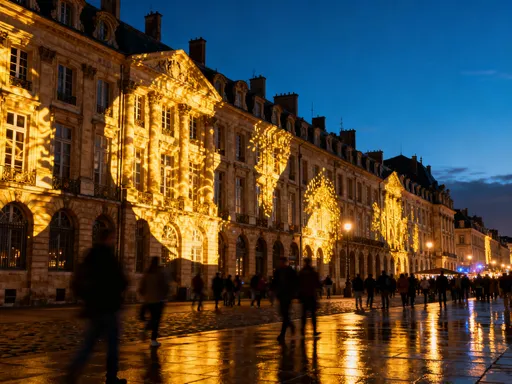
The city’s lighting design enhances the mood. Rather than flashy displays, Bruges uses subtle, tasteful illumination—strings of warm bulbs along canals, glowing wreaths on historic gates, candles in window sills. At night, the reflections on the water create a dreamlike effect, as if the city is floating between earth and sky. Evening walks are a highlight, offering moments of stillness amid the joy. One might pause by the Lake of Love, where swans glide silently under frost-laden trees, or stand beside the Belfry as its chimes mark the hour. These are not tourist photo ops but genuine experiences of peace and beauty.
For families, winter in Bruges is especially welcoming. The pace is slower, allowing time for shared meals, storytelling, and quiet moments. Hotels often offer special packages with breakfast by the fire, and many restaurants feature seasonal menus with local specialties—game stews, root vegetables, spiced desserts. The lack of large crowds means children can explore safely, marveling at nativity scenes in churches or building snowmen in quiet parks. It is a season that encourages presence, gratitude, and connection—values at the heart of Bruges’ enduring charm.
Beyond the Crowds: How to Experience Festivals Like a Local
To truly appreciate Bruges’ festivals, one must move beyond the guidebook and embrace a slower, more thoughtful approach. Timing is essential. Major events like the Holy Blood Procession or the Flower Festival attract visitors from across Europe, so booking accommodations six to nine months in advance is advisable. Staying in a family-run guesthouse or a quiet neighborhood outside the immediate center can offer a more authentic experience, with hosts who share insider tips and personal stories.
Transportation within the city is best done on foot or by bicycle. The historic center is compact, and walking allows one to notice details—carved gargoyles, hidden courtyards, the sound of a distant organ—that are missed when rushing. Public trams and buses connect outer districts, but the real joy lies in wandering without a strict itinerary. Early mornings are especially rewarding: the streets are nearly empty, the light is soft, and one can witness the city waking up—bakers opening their ovens, shopkeepers arranging displays, swans gliding across misty waters.
For deeper connection, consider joining a guided walk led by a local resident. Many community organizations offer tours in English, focusing not on famous landmarks but on everyday life, traditions, and personal memories. These walks often include visits to lesser-known chapels, family-run breweries, or historic homes still occupied by descendants of medieval guild members. Another meaningful option is attending a festival’s early-morning ceremony, such as the blessing of the relic before the Holy Blood Procession. These moments are quieter, more reflective, and often open to respectful visitors.
The key to authentic engagement is respect. Observe traditions without intruding, ask questions with humility, and support local businesses—buy a handmade ornament, order a regional dish, attend a community concert. Avoid treating the city as a backdrop for photos; instead, seek to understand the stories behind the rituals. A simple “goede dag” (good day) in Dutch, a nod during a procession, or a quiet moment of silence at a candlelit service can open doors to genuine connection. Bruges rewards those who come not just to see, but to listen, feel, and remember.
Why These Celebrations Matter: Preserving Identity in a Tourist World
In an era of mass tourism and cultural homogenization, Bruges stands as a testament to the power of preservation. Its festivals are not relics frozen in time but living traditions that adapt without losing their soul. They remind us that identity is not static—it is nurtured through participation, memory, and care. The people of Bruges have chosen not to turn their city into a theme park but to share their heritage with integrity, ensuring that each celebration remains meaningful to those who live it.
This balance is not easy. The city welcomes millions each year, yet it has implemented thoughtful measures to protect its character—limiting large tour groups, regulating short-term rentals, and prioritizing cultural education. Residents are not displaced by tourism but remain central to the city’s life. Children still attend local schools, families shop at neighborhood markets, and elders gather in the same cafes where they have sat for decades. This continuity ensures that festivals are not performances for outsiders but shared moments of belonging.
For travelers, the lesson is profound. The true journey is not about collecting destinations but about seeking understanding. To witness a procession, to taste a seasonal brew, to stand in silence beneath a Gothic arch during a concert—is to touch something timeless. These experiences linger not in photographs but in the heart. They invite us to slow down, to honor the past, and to find joy in the rhythms of community and season.
Bruges teaches us that culture is not a commodity but a gift—one that must be received with gratitude and respect. As you plan your visit, ask not only where to go but how to be. Seek depth over checklists, connection over convenience, and presence over possession. The cobblestones of Bruges echo with celebration not because they are old, but because they are loved. And in that love, we may find a model for how to travel—and live—with greater meaning.