Where Flavor Meets Frame: Capturing Cartagena’s Soul Through Its Street Food
You know that feeling when a single bite and a perfect photo can define an entire trip? That’s Cartagena for you. This coastal gem in Colombia doesn’t just dazzle with color—it feeds your senses. I wandered its cobbled streets, camera in one hand, arepa in the other, chasing moments where food, light, and culture collide. What makes a meal photogenic? It’s not just about looks—it’s soul. The sizzle of plantains hitting hot oil, the slow stir of a stew passed down through generations, the smile of a vendor who remembers your order—these are the details that live beyond the frame. Here’s how I captured both, one delicious, picture-perfect bite at a time.
First Light in the Old City: A Photographer’s Morning Ritual
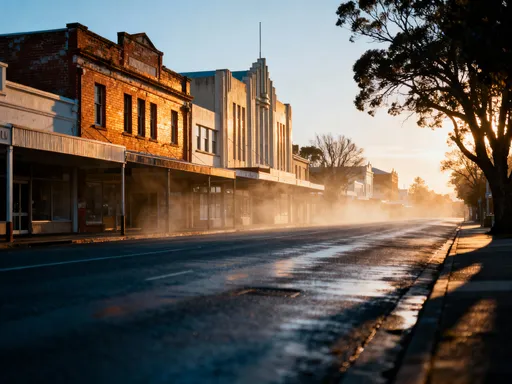
There is a quiet magic in Cartagena before the heat settles. At sunrise, the historic center stirs gently, its coral-stone walls glowing in soft gold. The streets, still damp from the night’s mopping, reflect the early light like mirrors, doubling the beauty of every pastel façade. This is the golden hour for both photography and presence—when the city feels like it belongs only to you. For food photographers, these first moments offer unmatched clarity: soft, diffused light that caresses rather than overwhelms, ideal for capturing the delicate steam rising from a cup of tinto or the crisp edge of a freshly fried empanada.
My mornings often began at a small corner stall near Plaza Santo Domingo, where an older woman named Doña Marta has served breakfast from the same wooden cart for over thirty years. Her routine is a ritual: the slow pour of coffee through a cloth filter, the crackle of corn masa hitting oil as arepas form on the griddle, the careful layering of ripe avocado and crumbled queso blanco. I learned to arrive early, not just for the best light, but to honor the pace of her craft. Rushing would mean missing the way her hands move—sure, practiced, full of memory. And that kind of authenticity doesn’t photograph well under harsh midday sun.
The key to morning photography in Cartagena’s Old City lies in timing and restraint. With few tourists about, you can take your time without blocking foot traffic or disturbing the scene. Use a low angle to include the texture of the cobblestones beneath the food, or frame your shot so that a sliver of the colonial architecture peeks in behind the plate. A polarizing filter helps reduce glare on glossy plantains or wet fruit, while a fast lens—like a 50mm f/1.8—allows for sharp focus even in lower light. But no gear replaces patience. Wait for the vendor to hand a customer their order, for the sunlight to catch the oil on a patacón—those are the moments that tell the full story.
The Art of the Bite: Why Cartagena’s Street Food Is Built to Be Seen
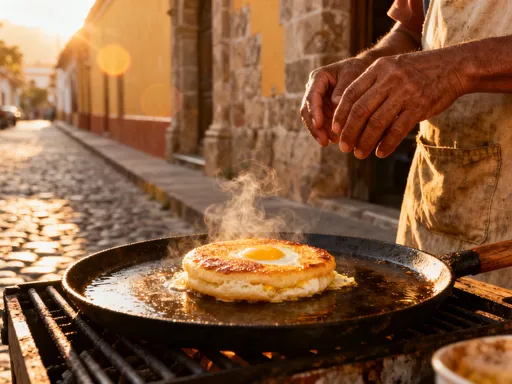
Colombian street food is not merely eaten—it is experienced. In Cartagena, where the Caribbean meets centuries of cultural fusion, every dish is a mosaic of color, texture, and tradition. Take the humble arepa de huevo: golden fried corn cake with a whole egg nestled inside, sometimes a hint of fried pork. Sliced open, it reveals a yolk that glows like the morning sun, surrounded by crisp edges and soft masa. It’s inherently photogenic, not because it’s styled, but because its preparation—frying, layering, hand-wrapping in banana leaves—creates natural drama.
Then there are the fruit bowls—pyramids of mango, papaya, lulo, and guanábana, each slice glistening with a light syrup of lime and panela. The contrast of colors is striking: deep orange against pale green, crimson dragon fruit beside translucent slices of coconut. These aren’t arranged for cameras; they are built for appetite. Yet their visual impact is undeniable. The vibrant hues come not from dyes but from soil, sun, and season—nature’s own palette.
What makes Cartagena’s street food so visually compelling is its honesty. There is no attempt to hide the process. You see the oil shimmering in the pan, the vendor’s hands dusting yuca fritters with salt, the stack of chontaduro palms waiting to be peeled. This transparency creates authenticity in images. A photograph of a bubbling pot of ajiaco may not show every ingredient, but the steam, the herbs floating on top, the wooden spoon resting against the edge—these details speak louder than perfection. The food tells its own story, and the camera simply listens.
Behind the Lens: Tools and Tricks for Authentic Food Photography
Photographing street food in a tropical climate demands both technical readiness and cultural sensitivity. The heat and humidity can fog lenses and drain batteries, so lightweight, weather-resistant gear is essential. I traveled with a mirrorless camera and two prime lenses—a 35mm for environmental shots and a 90mm macro for detail work. A small reflector fits easily in a day bag and helps bounce light onto shadowed areas without drawing attention. Tripods are often impractical in narrow streets, so mastering handheld stability is key: tuck your elbows in, use a fast shutter speed, and brace against a wall when possible.
Natural light remains the most powerful tool. Avoid using flash, which flattens texture and can startle both subjects and bystanders. Instead, position yourself so the sun is behind or to the side of your subject. Early morning and late afternoon offer the most forgiving light, while midday calls for shaded spots—under a market awning or a balcony overhang. Look for dappled light filtering through palm leaves; it adds pattern and depth without harsh contrast.
Equally important is the ethics of the lens. Always ask permission before photographing vendors. A smile, a simple “¿Puedo tomar una foto?” goes a long way. Some may wave you off, and that’s okay. Others might pose proudly, especially if you buy their food. That’s not just etiquette—it’s solidarity. Every photo taken should honor the person behind the dish. And remember: if you’re shooting a meal, commit to eating it. Wasting food for a better angle is disrespectful. Support the local economy with every click—buy what you shoot, and tip generously.
Beyond the Plate: Capturing the People and Places Behind the Meal
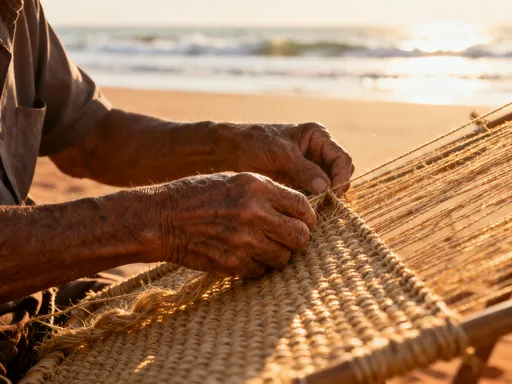
The most powerful food photographs don’t show just the dish—they show its origin. In Cartagena, this means capturing the hands that shape the dough, the baskets woven from river reeds, the weathered signs advertising “Arepas Calientes” in peeling paint. These elements ground the image in place and people. A photo of a seafood ceviche is beautiful, but one that includes the fisherman’s net draped over a stool, or a child watching from behind a counter, becomes a narrative.
In the neighborhood of Getsemaní, I met Señora Rosa, who runs a tiny kitchen from her front porch. Her sancocho—a rich stew of chicken, yuca, and plantain—simmered in a blackened pot over a gas flame. What struck me wasn’t just the aroma, but the rhythm: her granddaughter setting the table, a neighbor stopping by to chat, the radio playing vallenato in the background. I waited until she ladled the stew into a bowl, her hands steady, the steam rising in curls. That moment—ordinary, intimate—became one of my most cherished images.
El Cabrero, another residential area just outside the walled city, offered different textures. Here, women sell cocadas—coconut candies—on folding tables beside their homes. The colors are bright: yellow, pink, deep brown. But the real story is in the details—the cracked tiles underfoot, the laundry hanging above, the dog napping in the shade. I framed my shots to include these surroundings, using a wide aperture to keep the food sharp while letting the background blur into impressionistic color. These images don’t just document food—they document life.
Context also means capturing the marketplace itself. At Mercado Bazurto, the city’s largest public market, the energy is overwhelming in the best way. Fishmongers shout prices, farmers unload crates of lulo and maracuyá, and the air hums with the scent of cumin and cilantro. I arrived at dawn, when the light slanted through the metal roof, illuminating dust motes and droplets of water on mango skins. I focused on small vignettes: a hand selecting avocados, a knife slicing through a green papaya, a vendor wrapping empanadas in wax paper. These micro-moments, when stitched together, form a portrait of a community.
Golden Hour Gourmet: Dinner Scenes Worth Waiting For
If mornings belong to quiet reflection, evenings in Cartagena belong to celebration. As the sun dips below the Caribbean Sea, the city transforms. The massive stone walls that once defended against pirates now glow in warm amber light, and seaside terraces begin to fill with locals and visitors alike. This is golden hour at its most cinematic—a time when food doesn’t just nourish, it performs.
Dinner by the water offers some of the most photogenic moments. Ceviche, made with fresh corvina, lime, red onion, and ají, is often served in clear glasses that show off its layers. Placed on a wooden table with the ocean behind, it catches the last rays of sunlight, the citrus juice shimmering like liquid gold. I waited for the exact moment when a couple raised their glasses in a toast, the reflection of the waves dancing in the glass. That image—full of joy, light, and connection—felt more complete than any staged shot.
Candlelight adds another dimension. At a small family-run restaurant in the walled city, I photographed a platter of grilled shrimp and fried patacones illuminated by a single beeswax candle. The flame flickered in the breeze, casting soft shadows on the food and the hands reaching for it. I used a slow shutter speed to capture the movement of the flame, creating a slight blur that added warmth and motion. The image wasn’t technically perfect, but it felt true.
Seafood dominates Cartagena’s dinner tables, and for good reason. From mojarra frita to coconut rice with lobster, the flavors are bold and the presentation naturally elegant. I learned to shoot from above for platters—showing the arrangement of components—or at eye level to include the faces of those sharing the meal. The goal wasn’t just to make the food look delicious, but to make the experience feel inviting. A well-composed dinner photo should make the viewer want to pull up a chair.
From Snap to Story: Curating a Visual Food Journey
A single photograph can capture a moment, but a series tells a journey. Back in my guesthouse each night, I reviewed my images not just for technical quality, but for narrative flow. Could someone follow my day through the photos? Did they feel the shift from morning calm to evening energy? I began grouping them chronologically: breakfast empanadas under soft light, midday fruit bowls in vibrant markets, dusk shots of ceviche by the sea, candlelit dinners in hidden courtyards.
Editing was minimal. I adjusted exposure and white balance to reflect what my eyes had seen, but avoided heavy filters that distort color or texture. Over-editing risks losing authenticity—turning golden hour into neon fantasy, or a simple meal into something unattainable. The beauty of Cartagena’s food lies in its accessibility. A perfect image should feel within reach, not like a dream.
I also began journaling short captions: the vendor’s name, the price of the dish (often less than two dollars), a quote if they shared one. “This recipe is from my mother,” said Doña Marta. “She learned it from her grandmother in Tolú.” Those words, paired with her arepa, transformed the photo from documentation to dialogue. I saved these notes with the images, creating a living archive of flavor and memory.
Curating a visual story also means knowing what to leave out. Not every shot makes the cut. Some are blurry, some crowded, some just don’t carry the feeling. I selected only those that evoked emotion or insight. The result was a sequence that didn’t just show what I ate, but how I experienced it—slowly, respectfully, gratefully.
Savoring More Than Taste: How Food Photography Deepens Travel
In a world of rapid travel and instant sharing, food photography can be reduced to performance—chasing likes, not meaning. But in Cartagena, I rediscovered its deeper purpose. Slowing down to compose a shot meant slowing down to truly see. It meant noticing the way a vendor wiped her hands on her apron before handing me a warm buñuelo, or how the light changed on the wall behind her as the day passed. The camera didn’t distance me from the experience; it deepened it.
Photographing food became a form of mindfulness. Each meal required presence: to observe, to ask, to wait, to appreciate. And in that presence, connections formed. Vendors remembered me. Children waved when I passed. I was no longer just a tourist with a camera—I was a guest, welcomed into daily rhythms. That shift changed not only my photos, but my heart.
Food photography, at its best, is an act of gratitude. It honors the labor behind every dish, the culture in every recipe, the land that grows every ingredient. In Cartagena, where history and flavor are woven into every street corner, that gratitude feels essential. The lens is not a shield, but a bridge—one that connects us to people, to place, to the quiet beauty of a perfectly fried arepa under golden light.
So when you travel, eat mindfully. Shoot respectfully. Let your photos reflect not just what you saw, but what you felt. Because the most lasting souvenirs aren’t the ones you post online—they’re the ones that stay with you, warm and real, like the memory of a shared meal in a sunlit plaza. In Cartagena, I didn’t just capture flavor. I learned to savor it—with my eyes, my heart, and my hands.